

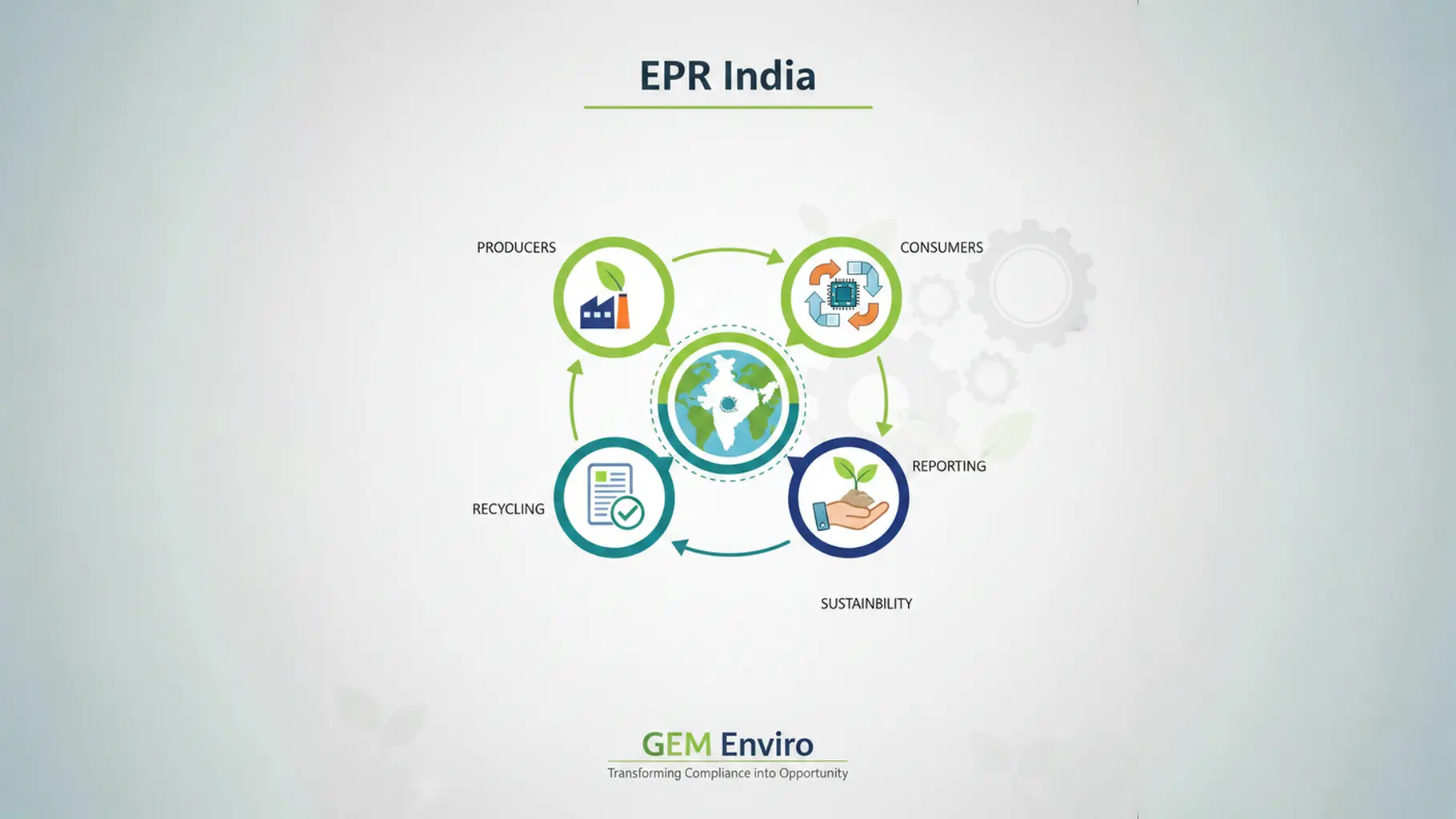
Extended Producer Responsibility (EPR) has become a critical regulatory and sustainability requirement for businesses operating in India. As waste generation continues to rise, environmental authorities are increasingly shifting accountability toward producers. Consequently, EPR places the responsibility of managing post-consumer waste on producers, importers, and brand owners rather than on local governments alone.
For companies dealing with plastic packaging, electronics, or consumer goods, understanding extended producer responsibility is no longer optional. Instead, it has become essential for ensuring legal compliance, protecting brand reputation, and supporting long-term sustainability goals.
This guide explains what Extended Producer Responsibility is, how it works in India, and how businesses can meet EPR obligations effectively.
What Is Extended Producer Responsibility?
EPR is an environmental policy framework that makes producers responsible for the entire lifecycle of their products. In particular, it focuses on the collection, recycling, and environmentally safe disposal of post-consumer waste.
Under EPR, businesses are accountable not only for manufacturing and selling products but also for managing waste after consumers discard them. As a result, EPR encourages companies to design sustainable packaging, invest in recycling systems, and reduce overall environmental impact.
EPR Framework in India
In India, EPR is implemented under the Plastic Waste Management Rules and E-Waste Management Rules, which are governed by the Ministry of Environment, Forest and Climate Change. These regulations mandate that Producers, Importers, and Brand Owners (PIBOs) must ensure the collection and recycling of waste generated from their products.
Moreover, businesses are required to register on the central pollution control portal, submit periodic compliance reports, and meet assigned recycling targets. If these obligations are not met, companies may face penalties, operational restrictions, or reputational risks.
Who Needs to Comply With EPR?
Extended producer responsibility applies to a wide range of businesses. For example, it includes:
- Manufacturers using plastic packaging
- Importers of packaged products
- Brand owners selling goods under their own label
- Companies dealing with electronic and electrical equipment
Therefore, if your business introduces packaging or products into the Indian market, EPR compliance is mandatory.
Key Steps to Achieve EPR Compliance
Achieving extended producer responsibility compliance requires a structured and well-planned approach. Typically, the process involves the following steps:
1. EPR Registration
First, businesses must register on the relevant government portal and obtain approval for their EPR plan.
2. Waste Assessment
Next, companies must assess the quantity and type of waste generated. This step is crucial for determining accurate recycling targets.
3. Collection and Recycling
Afterward, authorized recyclers and waste management agencies handle the collection, segregation, and recycling of waste.
4. Documentation and Reporting
Finally, regular documentation and reporting ensure transparency and regulatory adherence. Without proper records, compliance may be questioned during audits.
Benefits of Extended Producer Responsibility for Businesses
Although EPR is a regulatory requirement, it also delivers several long-term benefits. Most importantly, it ensures legal compliance and reduces the risk of penalties.
In addition, extended producer responsibility helps businesses:
- Strengthen brand credibility and customer trust
- Improve ESG and sustainability performance
- Support circular economy initiatives
- Reduce environmental pollution and landfill dependency
As a result, companies that adopt EPR proactively often gain a competitive advantage.
Role of Professional EPR Management Partners
Managing extended producer responsibility internally can be complex. This is because regulations evolve frequently, reporting requirements are detailed, and on-ground execution requires expertise.
Therefore, professional environmental management partners play a critical role. They assist businesses in designing EPR strategies, coordinating waste collection, meeting recycling targets, and maintaining compliance documentation. By doing so, companies can focus on core operations while remaining fully compliant.
Conclusion
Extended Producer Responsibility is a cornerstone of India’s waste management and sustainability framework. As regulations become stricter, businesses must move beyond minimal compliance and adopt structured, transparent, and responsible waste management practices.
Ultimately, by understanding extended producer responsibility requirements and working with experienced environmental partners, businesses can transform compliance into an opportunity—protecting the environment while strengthening long-term resilience and trust.
To explore more services visit GEM Enviro
 Previous Post
 +91-11-49068377 Phone Line
 info@gemrecycling.comEmail Address
 Unit No. 203, P-3, Central Square, Bara Hindu Rao,